
 EN
EN



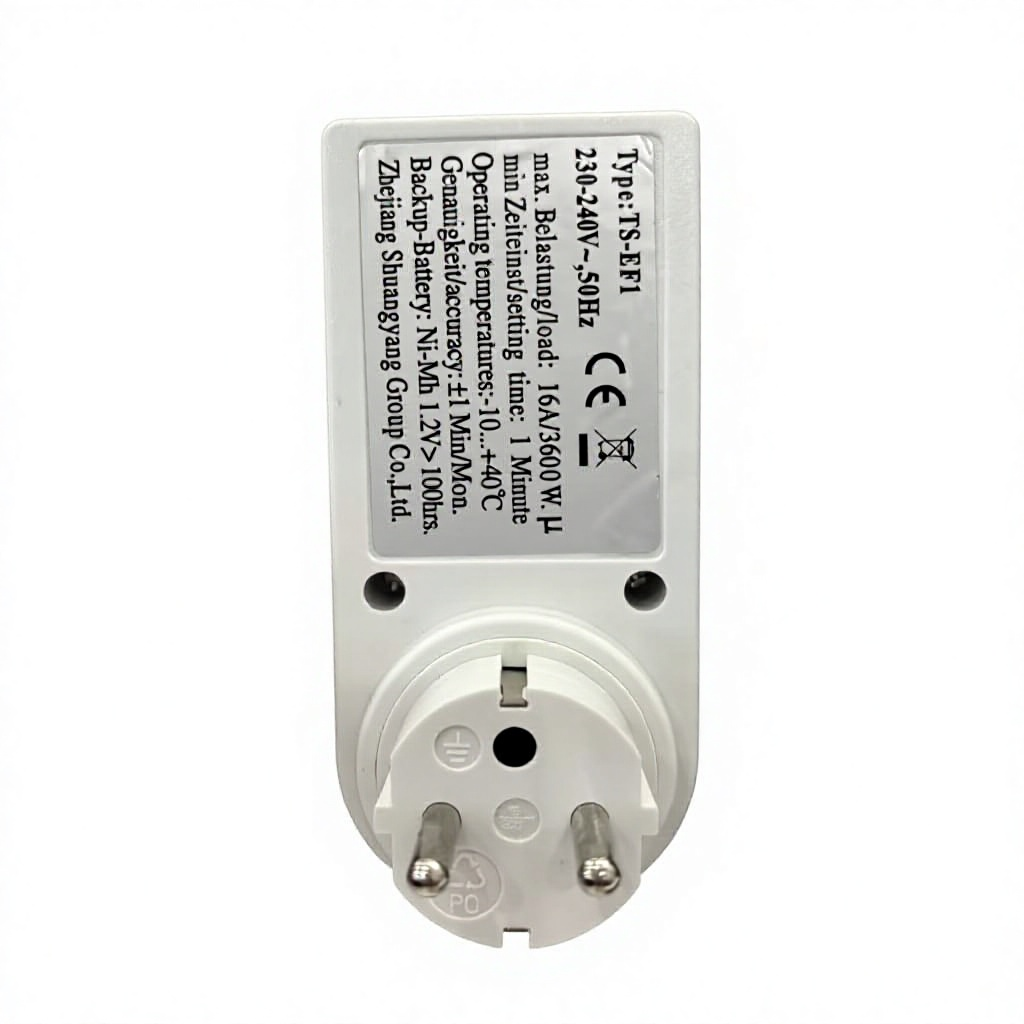
Smart Timer Integration with Home Automation Platforms
Modern smart timers transcend basic scheduling by embedding deeply into home automation ecosystems, transforming ordinary appliances into responsive, voice-controlled nodes. Rather than operating in isolation, these devices leverage platform APIs to synchronize with user routines, occupancy data, and environmental triggers—delivering a level of convenience manual timers cannot match.
Seamless compatibility with Alexa, Google Home, and Apple HomeKit
The true power of a smart timer emerges when it works with the voice assistants millions already use. Through simple setup routines, homeowners can link timers to Alexa, Google Home, or Apple HomeKit, enabling voice commands like “turn off the living room lamp in 30 minutes.” This integration goes beyond basic on/off control: it supports complex routines—such as dimming lights and powering down a coffee maker when a “goodnight” scene is activated. Because major voice assistants support standardized home-control APIs, timers from different manufacturers coexist without requiring extra hubs. The result is a consistent, cross-device experience that reduces friction and encourages broader adoption—even among non-technical users who can manage energy use and convenience with a single spoken phrase.
Matter, Zigbee, and Z-Wave support: Ensuring future-proof timer interoperability
Protocol support is the backbone of long-term smart timer viability. Matter—the IP-based connectivity standard developed by the Connectivity Standards Alliance—enables native compatibility across any Matter-certified ecosystem, eliminating proprietary bridges. For homes with existing mesh networks, Zigbee and Z-Wave provide low-power, reliable communication that maintains functionality even if Wi-Fi fails. A Zigbee-enabled timer can join an established lighting network with sensors and switches, enabling coordinated responses without internet dependency. Z-Wave’s proven backwards compatibility across more than 3,300 certified devices ensures today’s timer will work with controllers released years from now. This multi-protocol approach prevents vendor lock-in and allows confident mixing of devices from diverse brands—making smart timers a durable, flexible foundation for evolving home automation.
Energy Savings Through Intelligent Timer Scheduling
U.S. DOE-validated 5–12% reduction in household electricity use
Intelligent timer scheduling delivers a 5–12% reduction in household electricity use—a range validated by the U.S. Department of Energy. This occurs by automatically eliminating lighting and appliance operation during unoccupied hours, requiring no behavioral change. In a typical 2,000-square-foot home with 30 LED fixtures, automatic shutoff at bedtime or during work hours yields $40–$110 in annual savings. Savings compound when timers manage less obvious loads: a bathroom exhaust fan left running 8 extra hours daily wastes over 100 kWh per year. By integrating occupancy sensing, astronomical clocks, and adaptive learning, smart timers refine on/off cycles to avoid energy waste in empty rooms. A 2021 field study by the Northwest Energy Efficiency Alliance found that homes using programmable timers for lighting and ventilation achieved a 9.3% average reduction in whole-home energy use—well within the DOE’s validated range. This strategy targets the ~35% of residential energy consumed by plug loads and lighting, turning passive energy leakage into active, measurable management.
Eliminating phantom load with LED-optimized smart timer switches
Phantom load—the power drawn by devices when they appear off—accounts for up to 10% of residential electricity use, according to Lawrence Berkeley National Laboratory. LED-optimized smart timer switches eliminate this drain by physically cutting power to fixtures, not just dimming them. Unlike basic triac dimmers that leak 0.5–1 watt per fixture, zero-crossing timer switches disconnect the circuit entirely—reducing standby consumption to zero. In a home with 20 LED bulbs on such timers, that translates to $15–$25 in annual savings. Advanced models include load-sensing capabilities that detect when an LED driver enters standby mode and automatically disconnect after a set period of inactivity—particularly valuable for LED strips, under-cabinet lights, and landscape lighting, where phantom drain often goes unnoticed. By combining precise scheduling with full circuit disconnection, these timers convert a small but persistent energy leak into tangible, cumulative savings—directly supporting the broader 5–12% household reduction target.
Enhanced Security and Convenience via Remote Timer Control
Modern smart timers extend beyond simple on/off cycles, offering robust security and unmatched convenience through remote control. By integrating with smartphone apps, these devices let you manage lighting and appliances from anywhere—blending daily ease with proactive protection.
Smartphone app features: Geofencing, vacation mode, and real-time adjustments
A timer’s smartphone app brings location-aware automation to your home. Geofencing uses your phone’s GPS to trigger lights when you approach or leave—so you never arrive to darkness. Vacation mode mimics occupancy by cycling lights on a customizable schedule, while real-time adjustments let you override any setting instantly. Whether you’re at the office or traveling, you can turn off a forgotten appliance, adjust porch lighting, or simulate activity with a few taps. This remote control eliminates the need for physical panels, putting full command in your pocket—and reducing the anxiety of leaving home unattended.
Security-by-schedule: Randomized lighting patterns to deter intruders
Randomized lighting patterns add a critical layer of security by making schedules unpredictable. Instead of fixed on/off times that could be observed and exploited, smart timers vary activation by several minutes each day—convincingly simulating real human presence. When combined with motion-triggered lighting, this creates a multi-layered, silent defense that deters unauthorized visitors without demanding constant attention. It’s a simple, low-cost method that transforms ordinary lighting into an effective security tool.
Timers as the Lowest-Barrier Entry Point to Smart Home Automation
Smart timers require no central hub, complex wiring, or programming skills—just plug in, set a schedule, and save. Unlike full-home systems that demand integration across multiple protocols and apps, a simple timer connects directly to a lamp, coffee maker, or space heater and begins automating immediately. Families can reduce energy waste without needing to explain a dashboard—and if something breaks, replacement takes seconds. This simplicity makes timers the ideal first step into home automation: they deliver tangible convenience and cost savings without a steep learning curve, making smart living accessible to everyone—from renters to retirees.
FAQ
Q: What platforms do smart timers integrate with?
A: Smart timers integrate seamlessly with Alexa, Google Home, and Apple HomeKit, among others, allowing for voice control and creating synchronized routines.
Q: How do smart timers save energy?
A: By eliminating operation during unoccupied hours, managing phantom loads, and leveraging features like occupancy sensing, smart timers achieve 5–12% energy savings.
Q: Are smart timers compatible with older devices?
A: Many timers support multi-protocol compatibility, such as Matter, Zigbee, and Z-Wave, ensuring interoperability with a wide range of devices, including older ones.
Q: Can smart timers enhance home security?
A: Yes, they offer features like randomized lighting patterns, geofencing, and vacation modes to deter intruders and simulate presence.
Q: Are smart timers suitable for beginners in home automation?
A: Absolutely! They are easy to install, require no advanced knowledge, and are a cost-effective way to get started with smart home technology.