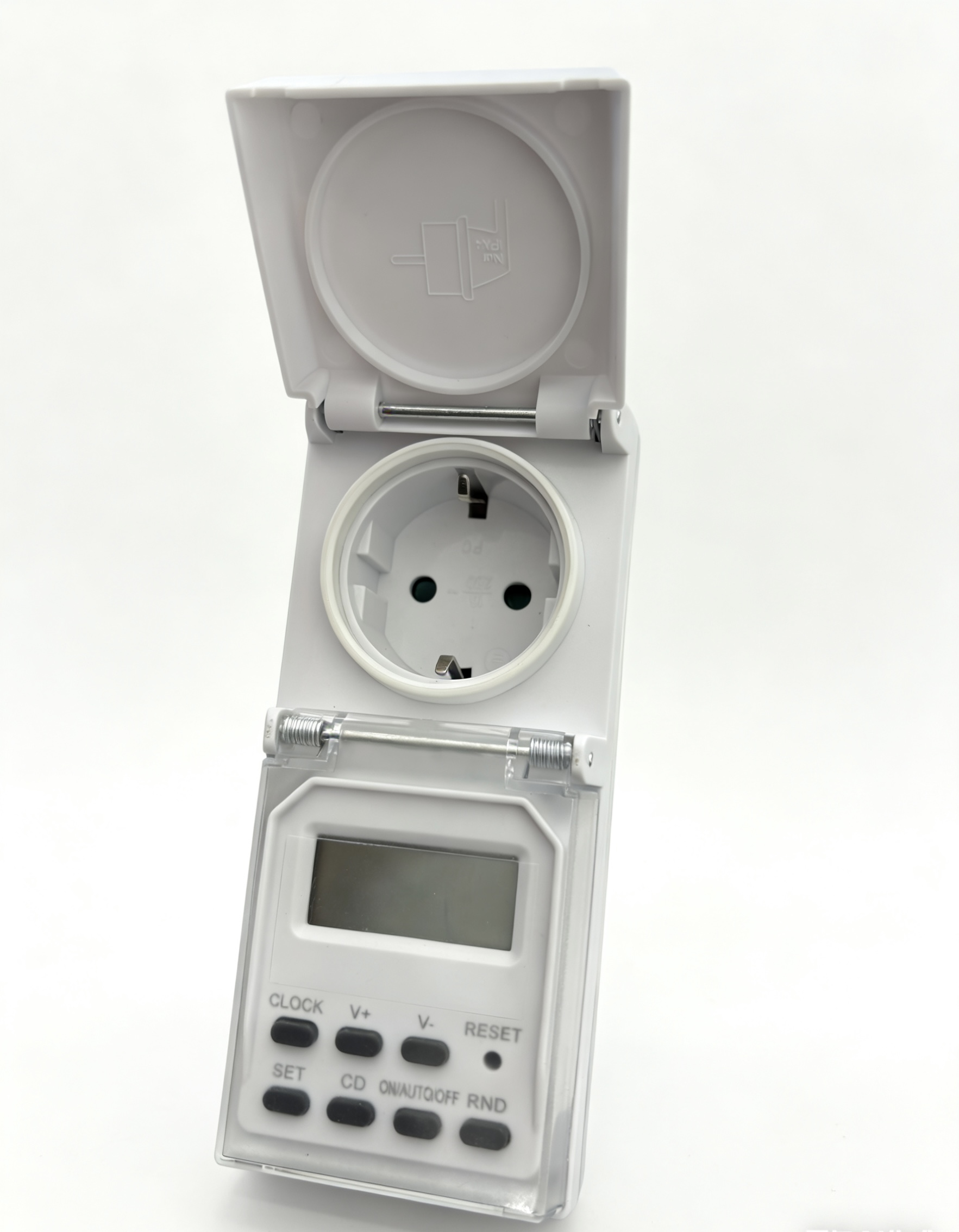
The Evolving Demands of Outdoor Micro-Automation
Setting up power controls for outdoor small appliances—like garden fountain pumps, landscape accent lights, patio heaters, or hydroponic aerators—sounds simple on paper, but getting it right in real-world environments is a different story. Compact timing devices, widely known as outdoor mini timers, have evolved from basic plug-in accessories into essential components that protect electrical equipment and keep power bills under control. Choosing the right outdoor mini timer isn't just about picking something that turns on and off on a schedule. It requires looking closely at real-world environmental exposure, complex motor-driven loads, and space-constrained weatherproof housings. When outdoor automation systems fail early, it's almost always because someone overlooked key technical factors during product evaluation. By understanding mini timer selection criteria, engineers, contractors, and brand sourcing managers can steer clear of early device failure, short circuits, and frustrating GFCI trip issues.
Environmental Resilience: Evaluating Ingress Protection (IP65 vs. IP67) and Thermal Limits
Water and dust are constant threats outdoors, making enclosure protection the absolute starting point for any selection effort. Standard indoor timers typically carry an IP20 rating, which offers zero protection against rain, splashback, or morning condensation. For outdoor setups, checking the IP65 vs. IP67 rating according to IEC 60529 standards is vital. An IP65 IP67 timer provides solid dust-tight security, but their liquid defenses differ in meaningful ways. An IP65 rated timer handles low-pressure water jets from hose nozzles and heavy rainstorms with ease, making it a great fit for elevated garden outlets or wall-mounted patio setups. On the other hand, an IP67 rating allows temporary immersion up to one meter deep, which is essential for ground-level boxes or low-lying garden beds where rain puddles naturally gather. Field technicians also know that temperature swings cause air inside cheap plastic housings to expand and contract, sucking moisture right through tiny seams. High-quality timers solve this by using UV-stabilized polycarbonates and flexible silicone gaskets that stay sealed tight from minus twenty-five degrees up to fifty-five degrees Celsius.
Electrical Compatibility: Navigating Inductive Loads and Inrush Current Dynamics
One of the most common reasons an outdoor timer breaks prematurely comes down to a misunderstanding of electrical load behavior. While simple resistive loads like traditional heating elements draw steady current, motor-driven outdoor appliances—such as pond aerators, fountain pumps, and exhaust fans—act as inductive loads. When an inductive load timer triggers a motor to start up, it creates an instant spike in electricity called inrush current, often reaching six to eight times the motor's normal running current. For instance, a small two-hundred-watt water pump that normally draws under two amps can briefly pull ten to fifteen amps right at startup. Standard relay contacts meant for simple resistive lighting can't handle those repeated electrical arcs. Over time, the contacts erode, pit, or weld shut completely, leaving the pump running non-stop. Choosing a timer with TV-rated relays or heavy-duty AgSnO2 (silver tin oxide) contacts ensures the internal switch can absorb heavy startup surges over tens of thousands of cycles without sticking or burning out.
Control Precision and Smart System Integration
Inside modern mini timers, the control mechanism dictates both day-to-day usability and energy savings. Choosing between classic mechanical pin timers, digital microcontrollers, and wireless modules comes down to how much control the application demands. Mechanical pin models with fifteen-minute push pins remain popular because they are practically foolproof to set up and operate in the field. However, many current projects call for a smart outdoor timer equipped with Wi-Fi, Bluetooth, or Zigbee connectivity. Smart timers synchronize automatically with astronomical clock data, adjusting daily schedules as sunrise and sunset times shift throughout the year—a game-changer for decorative lighting and security setups. Cloud connectivity also gives users real-time power tracking, instant error notifications, and voice control. When opting for a smart mini timer, checking for non-volatile memory chips is key so saved schedules aren't lost during sudden power outages, along with a reliable battery backup for internal clock keeping.
Safety Certifications, Build Integrity, and Long-Term Reliability
Operating electrical gear outdoors means safety standards cannot be compromised. Thorough selection frameworks prioritize compliance with recognized international safety standards such as UL 917, IEC 60730, VDE, and GS mark requirements. Independent lab testing confirms that internal electrical spacing, creepage distances, and housing materials comply with strict flame-retardancy guidelines like UL94 V-0. Moreover, because outdoor small appliances usually plug into Ground Fault Circuit Interrupter (GFCI) outlets, electrical isolation between the internal timer electronics and power lines must be pristine. Poorly built timers can leak micro-currents that trip GFCI breakers continuously, causing unexpected downtime. Small design details—like spring-loaded outlet covers, heavy-duty molded strain relief cords, and internal fuse protection—are clear indicators that a timer is built for years of continuous outdoor service.
Strategic Manufacturing Capabilities and Global Supply Services
Picking the best mini timer for outdoor small appliances comes down to striking a balance between weatherproofing, inductive load handling, flexible scheduling, and verified safety certifications. Cutting corners with generic, unrated timers often leads to premature failure, water damage, or electrical hazards. Delivering long-term reliability in harsh conditions requires deep engineering know-how, precise tooling, and strict quality control on the factory floor. Leading manufacturers like Shuangyang Electrics set the standard in this space. Backed by dedicated R&D facilities, automated SMT assembly lines, and rigorous ISO9001 quality management, Shuangyang Electrics produces top-tier outdoor timing devices, smart power controllers, and IP-rated enclosures. With extensive OEM and ODM expertise alongside major global safety certifications (GS, CE, UL, VDE), Shuangyang Electrics offers scalable production and dependable supply chain solutions for international brands seeking high-performance outdoor power automation

 EN
EN