
 EN
EN



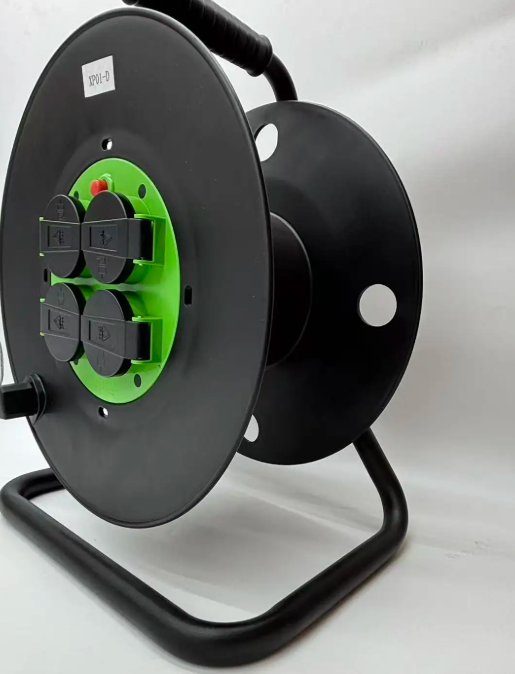
Regulatory Compliance and Building Code Requirements for Schuko Sockets
IEC 60364 and National Adaptations (e.g., DIN VDE 0100, BS 7671)
All commercial schuko socket installations must comply with IEC 60364—the international standard for low-voltage electrical installations. It establishes foundational requirements for safety, including minimum IP ratings for dust and water resistance, safe spacing from water sources, and accessibility provisions aligned with disability legislation.
National adaptations translate these principles into enforceable local rules:
- Germany’s DIN VDE 0100 mandates reinforced grounding continuity and stricter mechanical durability for sockets in public areas.
- The UK’s BS 7671 (18th Edition) requires 30mA RCD protection for all socket outlets in commercial premises.
- France’s NFC 15-100 defines minimum socket density per square meter—particularly critical in hospitality and retail spaces.
Non-compliance may trigger enforcement under EU Directive 2014/35/EU, with penalties up to €50,000. Projects involving more than 100 sockets require certified design validation prior to energization.
Commercial-Specific Mandates: Public Access, Duty Cycle, and Inspection Frequency
Commercial environments impose usage-based requirements beyond baseline code compliance. High-traffic zones demand enhanced durability, fault resilience, and proactive maintenance:
-
Public access areas (e.g., airports, shopping malls):
- Annual thermographic inspections to detect latent overheating
- Minimum 16A rating with verified duty cycle performance of ≥5,000 insertions
-
Industrial workshops:
- IP44-rated sockets installed within 3 m of active workstations
- Quarterly earth continuity testing to ensure grounding integrity under vibration and thermal stress
Inspection intervals scale with operational intensity:
| Environment | Test Interval | Critical Checks |
|---|---|---|
| Offices | 5 years | Contact tension, visible wear marks |
| Hotels/Restaurants | 2 years | Grounding integrity, signs of thermal degradation |
| Factories | 6 months | Enclosure seal integrity, terminal torque retention |
Data centers go further—requiring real-time leakage current monitoring per EN 50600 to support continuous uptime and personnel safety.
Electrical Safety: Grounding, Fault Protection, and Schuko Socket Design Integrity
Integrated Grounding via Spring-Loaded Side Contacts and Fail-Safe Operation
Schuko sockets feature mandatory, integrated grounding through spring-loaded side contacts that engage before live terminals during plug insertion. This fail-safe sequence ensures a continuous earth path is established prior to energization—redirecting fault currents safely to ground before human contact becomes possible.
The mechanical design makes sure plugs go in the right way and keeps grounding working properly even when there's vibration or if something gets partially disconnected. Limiting touch voltage stays below 50 volts AC according to IEC 61140 standards cuts down on electric shocks and also helps prevent fires caused by ongoing leaks. Tests have shown these spring contacts hold up well over time, maintaining their strength and keeping resistance under 0.1 ohms after more than 10 thousand insertions. That kind of durability means they work great for places where equipment gets used frequently throughout the day in commercial environments.
Ground Continuity Verification and Loop Impedance Limits per IEC 60364-6
Checking ground continuity right after installation is critical, and requires proper testing equipment. Commercial setups should have these tests done every two years as well. According to the IEC 60364-6 standard, TN-S systems need their earth fault loop impedance (Zs) kept below 1 ohm so that protective devices will actually trip when there's a problem. At 230 volts, they need to respond within just 0.4 seconds otherwise dangerous voltages could stick around on metal surfaces that people might touch. We've seen cases where improper grounding led to serious accidents, which is why following these guidelines isn't optional but absolutely necessary for safety.
Verification includes:
- Measuring conductor resistance from socket ground terminals back to the distribution board
- Testing Zs at the most remote socket on each circuit
- Confirming automatic disconnection via RCD/RCBO at ≤30mA sensitivity
Zs values exceeding 1.0Ω indicate insufficient fault-current capacity and require circuit redesign—such as shortening run lengths, increasing conductor size, or upgrading earthing arrangements—to eliminate electrocution risk.
Voltage, Wiring, and Terminal Standards for 230V Schuko Socket Installations
230V ±10% Compatibility and IEC 60446 Color-Coding (Brown/Live, Blue/Neutral, Green-Yellow/Earth)
Schuko sockets need to work properly within the standard voltage range of 230V plus or minus 10%, which means they should handle normal power grid variations between 207V and 253V without affecting the safety or performance of connected devices. Following the IEC 60446 color code standards is absolutely essential for anyone working with these sockets. Brown wires are live, blue ones are neutral, and green-yellow combinations indicate earth connections. Getting this right prevents costly mistakes when installing or maintaining electrical systems, particularly important in complex projects where multiple contractors might be on site at once, such as when outfitting offices or expanding retail spaces across different locations.
Securing terminals at the exact torque specifications provided by manufacturers is essential for keeping good conductivity even when subjected to mechanical stress or going through repeated temperature changes. Checking these connections regularly as part of routine safety inspections can spot any loosening early on before electrical resistance climbs to dangerous levels. Many modern terminal designs incorporate polarization features with recessed contacts that make it harder for workers to accidentally touch live parts. These designs also help prevent reverse wiring, which remains one of the main causes of insulation breakdowns and fires in older electrical systems across industrial facilities nationwide.
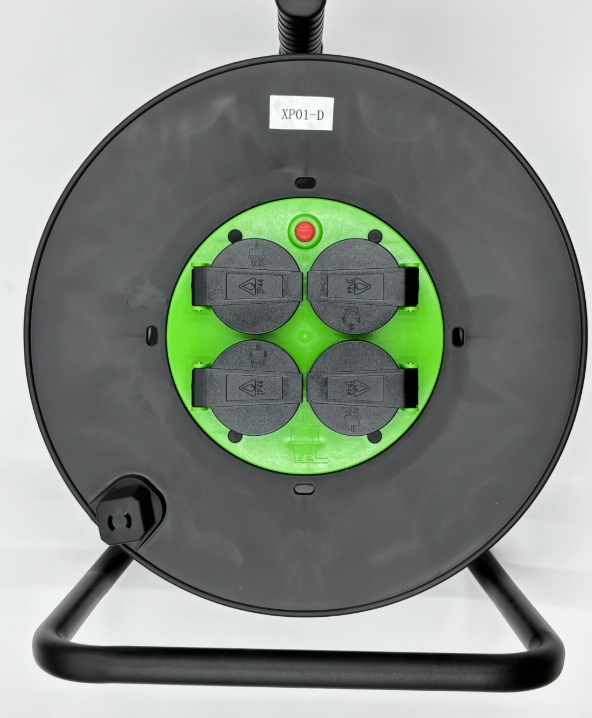
Current Ratings and Load Suitability of Schuko Sockets in Commercial Environments
10A vs. 16A Schuko Sockets: Matching Load Profiles to Public Areas, Transport Hubs, and Workshops
Getting the right current rating matters a lot if we want to avoid overheating problems while still handling all those growing business needs. The regular 10A outlets work fine in places with not too much power demand, like most offices or stores, since most devices plugged in there pull around half an amp max at most. Think laptops, point of sale machines, those energy efficient LED lights everyone installs these days. But when dealing with bigger power hungry stuff, we need those 16A sockets instead. These come into play at airports where baggage scanners run constantly, or in factories with air conditioning systems that kick on and off throughout the day. Industrial settings definitely require them too, especially where compressors start up, welders arc away, and all sorts of heavy duty machinery keeps running nonstop.
| Environment | Recommended Rating | Typical Devices | Max Load Capacity |
|---|---|---|---|
| Public Areas | 10A | Laptops, POS systems, LED lights | 2,300W |
| Transport Hubs | 16A | Baggage scanners, HVAC units | 3,680W |
| Workshops | 16A | Drills, compressors, welders | 3,680W |
Cable sizing must align precisely with socket rating: 1.5mm² conductors for 10A circuits and 2.5mm² for 16A installations—ensuring voltage drop remains within IEC 60364 limits. Oversizing cables by 25% is recommended for motor-driven loads to absorb inrush currents and sustain long-term duty-cycle reliability in high-traffic zones.
Table of Contents
- Regulatory Compliance and Building Code Requirements for Schuko Sockets
- Electrical Safety: Grounding, Fault Protection, and Schuko Socket Design Integrity
- Voltage, Wiring, and Terminal Standards for 230V Schuko Socket Installations
- Current Ratings and Load Suitability of Schuko Sockets in Commercial Environments