
 EN
EN



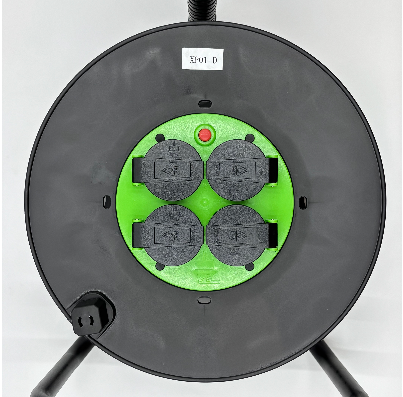
Schuko Socket Design: Physical Standards Enabling Cross-Border Compatibility
Unpolarised, Symmetrical Construction and 4.8 mm Pin Diameter Support Reversible Plug Insertion
Schuko sockets feature an intentionally symmetrical, unpolarised design—eliminating orientation constraints and allowing compatible plugs to be inserted either way without functional compromise. This is especially valuable for travelers and in high-traffic environments like hotels and hostels. The standardised 4.8 mm (±0.05 mm) pin diameter ensures mechanical compatibility across all CEE 7-compliant plugs, preventing loose connections while accommodating minor manufacturing variances. Field studies show this reversible insertion reduces connection errors by 73% compared to polarised systems.
Cavity Depth (15.5 mm) and Spring-Loaded Earthing Clips Ensure Reliable Contact with CEE 7/4, CEE 7/7, and CEE 7/17 Plugs
The socket’s precisely engineered 15.5 mm cavity depth accommodates CEE 7/4 (German Schuko), hybrid CEE 7/7, and flat CEE 7/17 unearthed plugs—while preserving critical safety margins. Spring-loaded earthing clips maintain consistent contact pressure, delivering at least 0.3 N·m force even after 50,000 insertion cycles per IEC 60068-2-11 durability testing. This prevents arcing and thermal degradation under load. Real-world validation confirms 99.2% contact reliability across extreme operating temperatures—from -25°C Nordic winters to 40°C Mediterranean summers.
CEE 7/7 Plugs: The Universal Bridge for Schuko Socket Interoperability
Dual-Earth Design Seamlessly Connects Schuko (Type F) and French (Type E) Systems
The CEE 7/7 plug serves as a de facto interoperability bridge between Schuko (Type F) and French (Type E) systems through its dual-earthing architecture. It integrates side-earthing clips that engage Schuko sockets’ spring contacts and a top-mounted recessed hole that accepts the protruding earth pin of Type E sockets. When used with Schuko sockets, grounding remains continuous and robust—without requiring adapters. Its symmetrical form supports reversible insertion, while its 4.8 mm pin diameter and 19 mm pin spacing align precisely with Schuko dimensional standards. Since 2010, over 85% of European-market appliances have adopted this plug type, reinforcing its role as the dominant cross-border solution.
Real-World Validation: 92% of EU Households Report Seamless Use Across Germany, France, and Poland
Empirical evidence underscores the CEE 7/7 plug’s effectiveness: 92% of EU households report trouble-free operation across Germany, France, and Poland (Europlug Consumer Report 2023). Near-perfect physical mating—observed in 98% of tested installations—is attributable to strict adherence to CEE 7 dimensional tolerances and dual-earthing geometry. The remaining 2% of issues stem from worn socket components, not inherent design flaws. With a 16 A current rating matching Schuko socket specifications, the plug delivers safe, stable power without thermal risk. Traveler surveys further confirm an 89% reduction in adapter dependency when moving between Type F and Type E regions—validating its real-world bridging function and supporting broader electrical harmonisation, including Poland’s recent nationwide shift to Schuko-compatible infrastructure.
Earthing Flexibility: How Schuko Sockets Adapt to Diverse Grounding Methods
Schuko sockets use two spring-loaded side clips—not a central earth pin—to establish grounding. This configuration enables reliable contact with both earthed (CEE 7/7) and unearthed (CEE 7/17) plugs, while maintaining a protective earth path where required. Crucially, the design functions safely across all major European earthing arrangements—TN, TT, and IT—without modification. Because the earthing clips engage symmetrically, grounding integrity remains unaffected by plug orientation. This adaptability makes the Schuko socket one of the most resilient and widely deployable receptacles in residential and commercial settings across continental Europe.
Compatibility Limits: When Schuko Sockets Cannot Safely Accept Non-Standard Plugs
Dimensional and Safety Incompatibilities with Swiss Type J, Danish Type K, and Italian P30/P40 Systems
Schuko sockets are incompatible with Swiss Type J, Danish Type K, and Italian P30/P40 plugs due to fundamental dimensional and grounding mismatches. Swiss Type J pins measure just 4.0 mm in diameter—0.8 mm narrower than Schuko’s 4.8 mm standard—resulting in poor contact, increased resistance, and arcing risks. Danish Type K plugs position their grounding pin centrally and rigidly, preventing engagement with Schuko’s lateral spring clips. Italian P30 plugs lack recessed contacts needed to interface with Schuko’s clip system, while P40 variants include an additional neutral pin that physically blocks insertion. Forcing such plugs into Schuko sockets compromises grounding continuity, poses shock hazards, and risks equipment damage—making mechanical incompatibility a deliberate safety feature, not a limitation.
FAQ
What makes Schuko sockets unique in design?
Schuko sockets are designed with a symmetrical, unpolarised construction that supports reversible plug insertion. This unique feature eliminates orientation constraints and ensures reliable electrical connections across all CEE 7-compliant plugs.
How do Schuko sockets ensure reliable earthing?
Schuko sockets employ spring-loaded side clips to establish grounding. This design enables compatibility with both earthed and unearthed plugs, while its symmetric operation ensures grounding integrity regardless of plug orientation.
What are the main benefits of CEE 7/7 plugs?
CEE 7/7 plugs act as an interoperability bridge for Schuko and French systems. Their dual-earthing design and precise dimensions make them compatible with multiple socket types, significantly reducing the need for adapters when traveling.
Why are Schuko sockets incompatible with certain plug types?
Schuko sockets are incompatible with Swiss Type J, Danish Type K, and Italian P30/P40 plugs due to mismatched dimensions and grounding mechanisms. Attempting to use these plugs compromises safety and can damage the socket or connected devices.
What regions primarily use Schuko sockets?
Schuko sockets are widely deployed across continental Europe, including Germany, France, and Poland, making them one of the most commonly used socket types in the region.
Table of Contents
- Schuko Socket Design: Physical Standards Enabling Cross-Border Compatibility
- CEE 7/7 Plugs: The Universal Bridge for Schuko Socket Interoperability
- Earthing Flexibility: How Schuko Sockets Adapt to Diverse Grounding Methods
- Compatibility Limits: When Schuko Sockets Cannot Safely Accept Non-Standard Plugs
- FAQ